Chanin Polpanumas
Context
Inspiration
The ordination of monks in 2021 is the inspiration for this work. I have studied many principles. One crucial thing Buddhism teaches is to be mindful and not careless in life. So, I went back and examined the context of Thai culture regarding death to help people understand what is expected but challenging to understand. It is like a mystery that humans cannot access.
We are all born, age, get sick and die naturally. We all know that the end of life is death, which we cannot avoid. After that, everything will change to a daily routine. We don't know when our life will die, today, tomorrow, this time, etc. Live in the present mindfully and without carelessness. As the sermon says: "All things change. Decay is a normal thing in everything. It would help if you were not careless. You must hurry and find shelter."
However, in other cultures, People rarely talk about death because it is the cause of death or a curse, etc. Whether it is Western or Eastern, Death is unavoidable, and we cannot avoid it.
Therefore, we all have to be mindful and not careless. If death is near you, you will know how to live well.
Outline of my practice
I create works using various media such as photographic art, installation art, etc. Chanin's work is inspired by his experiences as a monk, with his interest in Buddhism, death, present existence, and impermanence. My work has been exhibited both in and outside Thailand, such as in England.
Mapping

The mapping explores the connection between Buddhism, meditation, artwork, and emotion in a meditation workshop, highlighting its therapeutic and meditative aspects. It highlights the benefits of combining these elements, including personal growth, stress reduction, and emotional intelligence enhancement, and offers tips for overcoming obstacles.
Book

Author: Yuval Noah Harari
Book title: Sapiens: A Brief History of Humanity
Publication date: 2015
"Sapiens: A Brief History of Humanity" explores the evolution of humanity from a single species to the only species on Earth, highlighting factors like fire control, communication, and gossiping. Agriculture has allowed people to live together, eliminating the need for nomadic forest dwellers. The book also emphasizes the importance of legends, stories, and religions in fostering cooperation and accomplishments among millions of people.

Author: Francesc Miralles
Book title: Ikigai
Publication date: 2017
Ikigai, a Zen philosophy, encourages self-discovery and happiness through self-awareness. To overcome burnout in work, individuals must answer four questions: what they love, excel in, can earn, and what the world needs, leading to improved work experiences and life success.
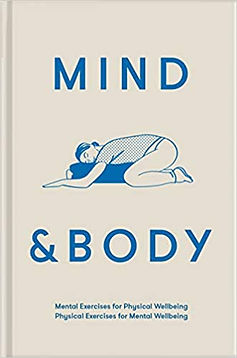
Author: The school of life
Book title: Mind & Body
Publication date: 2021
The book aims to improve the relationship between our physical and mental selves, leading to greater self-confidence, wisdom, and freedom. It explores the delicate nature of the body and its impact on our minds, emphasizing the importance of balance. The book offers advice on calming the mind, embracing appearance, and expressing thoughts through activities like singing, dancing, art, and potential spiritual release.

Author: Sven Spieker
Book title: Destruction
Publication date: 2017
This book explores the impact and significance of destruction in the work of significant artists since the 1960s. Artists have been using various methods to investigate meaning, transforming nihilism from a negative or passive condition into a constructive category. The author uses destruction to eliminate attachment, compromise the integrity of structures, and install a sense of tyranny, highlighting the subversive power of media images.

Author: Martin Reed & Sarah Jones
Book title: Silver Gelatin
Publication date: 2001
Silver Gelatin is a practical art book demonstrating liquid photographic emulsion, allowing photographers and artists to create images on various materials. The book is divided into two sections, featuring top photographers and artists and a technical guide covering various surfaces like handmade paper, plaster, fabric, glass, ceramics, rubber, metal, painted surfaces, wood, plastics, and stone.

Author: Beth Kempton
Book title: Wabi Sabi
Publication date: 2020
"Wabi-sabi" is an ancient Japanese philosophy deeply rooted in Japanese culture, promoting the idea that all things are imperfect and unfinished. It is often compared to the story of a float in the wind, a cherry blossom, or a maple leaf. Bet Kempton, a female writer, explores the meaning of "wabi-sabi" and its benefits, focusing on its application in a perfect world. By understanding that a good life is an imperfect one, we can better appreciate and embrace our imperfections.

Author: Roland Barthes
Book title: Mythologies
Publication date: 1957
"Mythologies" is a book by Barthes that analyzes contemporary culture, focusing on hidden meanings in everyday objects, advertising, and popular culture. It examines how culture shapes our world perception and reveals underlying narratives.
Philosophy

Buddha image

Photograph of Arthur Schopenhauer

Photograph of Martin Heidegger
In unit three, I talk about three philosophers.
The first is the Buddha. In past of life, Buddhism has always been involved in my life. I have begun to learn Buddha's Dharma since childhood; the important thing is to be aware of the present. The last words before Lord Buddha's death were: "All conditioned things change. Decay is a normal process. Therefore, all of you must not be reckless. You must hurry to find your refuge." Nirvana (liberation from birth, old, sickness, and death), discharge from the sufferings of the Vada Sana (the Buddhist religion).
Schopenhauer's philosophical views, particularly his pessimistic outlook on life and the role of desire in suffering, were influenced by Eastern philosophy, notably Buddhism, and his interpretation of love and suffering. To be free from suffering, one must become a monk or engage in activities like gardening or watching movies.
Martin Heidegger's philosophy, centred on "Dasein" and Being, connects with Buddhist thought on existence, authenticity, and human experience. Heidegger also influenced Eastern thought. In 1961, he suggested spending more time in the cemetery to improve one's life, as it helps us understand the truth of life and the path to freedom.
Buddhism promotes spiritual enlightenment and alleviation of suffering through meditation and the Noble Eightfold Path. Martin Heidegger and Arthur Schopenhauer, German philosophers, share similarities in their theories on suffering and enlightenment.
I believe Buddhism, a philosophy emphasizing awareness and Nirvana, has significantly influenced my life. Philosophers like Schopenhauer and Heidegger offer unique perspectives on Buddhism, focusing on love's role in suffering and the pursuit of freedom. The connections between Eastern and Western philosophies can be enlightening.
Artist

Déjà vu: When the Sun Rises in the West by Natee Utarit
Natee Utarit, a Thai artist, explores the potential consequences of Buddhism's spread to Western culture. His work, inspired by an exchange in Italy, prompts a rethinking of the concept. Utarit's work, inspired by a statue similar to the Buddha in Thailand, aims to communicate death seamlessly globally, highlighting the global understanding of Buddhism. The important thing is, If Buddhism were born in the Western world, what would happen to create an exhibition called Déjà vu: When the Sun Rises in the West.
.jpg)
Extinction Beckons by Mike Nelson
I visited Mike Nelson's work at the Southbank Gallery, which transformed the gallery's spaces into a fictional world reflecting our identity. The artist played with the audience's emotions and opened up the viewing experience, creating a captivating desert and buildings. The author respects art galleries and artists who can simultaneously understand emotional and mental openness.

Blue by Apichatpong Weerasethakul
Thai director Pichatpong Weerasethakul uses a simple technique to reflect plastic, creating a sublime experience. The artist's use of exciting signs, like making a fire, is linked to Granny, who appears to use CG. The video's rural context and sound create harmony between the local context and the internal state of Buddhism, making it a compelling work to explore new possibilities and experiment with new possibilities.
If you want to watch it, you can click on this link
(https://www.youtube.com/watch?v=8Hk4zepxyoE&t=1s).

Natural History by Damien Hirst
Damien Hirst, a Christian artist, explores death through his work at the Gagosian Gallery. His work, similar to the Buddhist philosophy of death, features terrifying animals like sharks, goats, and severed-necked cows. The exhibition captures the artist's emotional state, reminiscent of the Buddhist philosophy of recollecting death. The exhibition highlights the artist's connection to the past.

George Frederic Watts
George Frederic Watts was a successful 19th-century British artist known for his portraits, landscapes, and Symbolist paintings. His reputation earned him the title of 'England's Michelangelo'. He also created a cult of symbolism in painting, which has influenced my work somewhat. During the summer break, I also had the opportunity to visit this artist's village.
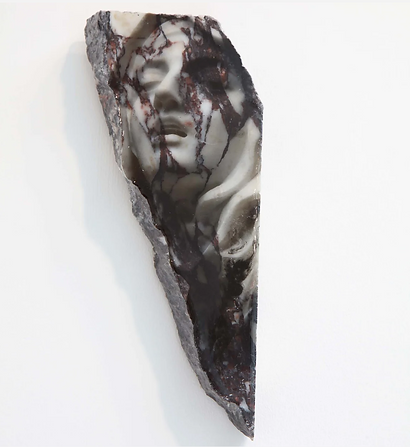
Glorious Oblivion by Liane Lang
Artist Liane Lang surveyed European statues of women, including rulers, writers, revolutionaries, scientists, nurses, and nuns. She found hidden busts from different eras and artistic quality, focusing on the personal monument, figure as memory, and fragility of objects. Lang recorded every statue, staged interventions, and made prints, highlighting the ambitions and failures of these women. The artist has a visual process similar to mine but is conceptually different.